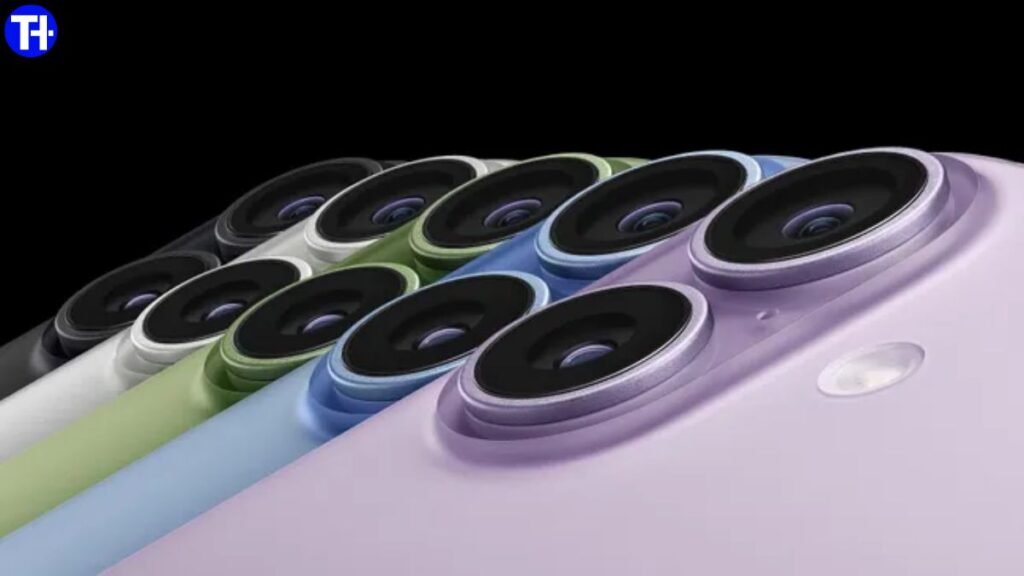
- Apple introduced its iPhone 17 range at yesterday’s Awe Dropping event
- Plenty of new features were revealed during the show
- But there were several important changes that got no airtime
The new iPhone 17 lineup and the incredibly thin iPhone Air were unveiled during Apple’s “Awe Dropping” event.
These are some of the most intriguing but little-known new features in the iPhone 17 series. Although Apple revealed nearly every detail of these smartphones, there were still many things it didn’t reveal on stage.
Faster charging…
Apple has also released a new ‘Dynamic’ power adaptor, which costs $39, in addition to the iPhone 17. Although its power supply rating is 40W, it has the ability to dynamically ramp up to 60W in brief bursts. In contrast to the 30 minutes you’ll receive with the iPhone 16 series, this allows the iPhone 17, iPhone 17 Pro, and iPhone 17 Pro Max to be charged to 50% capacity in about 20 minutes.
You won’t need a MagSafe charger to reach these speeds because the iPhone 17 devices also offer 25W Qi2.2 wireless charging; any suitable third-party adapter can now do so.
…but not for the iPhone Air

The iPhone Air regrettably loses out on the aforementioned improvements, even though they are applicable to the iPhone 17, iPhone 17 Pro, and iPhone 17 Pro Max. For starters, it can only charge at 20W MagSafe and Qi2 speeds, rather than the 25W that all other versions offer.
Furthermore, compared to its siblings, the iPhone Air has slower fast-charging speeds; you will reach 50% charge in 30 minutes as opposed to 20.
The return of the MagSafe Battery
To wirelessly charge your iPhone, the MagSafe Battery magnetically attaches to it. Unfortunately, the iPhone 17 models’ camera bumps interfere with this device, thus it only works magnetically with the iPhone Air.
Nevertheless, there is technological compatibility between the MagSafe Battery and other devices. Although it is only compatible with the iPhone Air, Apple claims that it may be used to “charge smaller accessories via USB-C.” Although Apple did not say which accessories it is compatible with, we anticipate that it will be able to function as a battery pack and charge any USB-C device.
Thwarting spyware and hackers

Apple’s focus on security is evident in the iPhone 17 model. Apple described how these phones have a mechanism called Memory Integrity Enforcement (MIE) that guards against memory corruption vulnerabilities in a blog post.
High-end spyware that is deployed at the national level regularly takes advantage of these flaws. Some iOS users will undoubtedly be targeted, even though the majority won’t. Apple’s MIE adds secret tags to each memory block in the iPhone in order to prevent that. The cost of effective spyware tactics will go up dramatically, and your iPhone will remain safer than ever if something tries to use that memory but doesn’t match the concealed tag.
A fix for screen flickering
Your iPhone’s brightness is controlled by Apple using pulse width modulation (PWM), which flickers LED or OLED pixels on and off rapidly. Some people get headaches and eye strain as a result of this, however the iPhone 17 Pro has a solution.
In the accessibility settings on this iPhone, you can turn off PWM if you’d like. MacRumors claims that although it has only been seen in the iPhone 17 Pro thus far, it may eventually be added to other models.
Feeling the heat

As you may have observed, the iPhone 17 Pro and iPhone 17 Pro Max now have aluminum frames instead of titanium ones like the phones from the previous year. During its event, Apple made reference to the change, but it provided no explanation.
Heat dissipation is most likely the cause. Aluminum can disperse high temperatures far more quickly and effectively than titanium because it is far more heat conductive. When combined with the iPhone 17 Pro devices’ redesigned vapor chamber, this should help them stay cooler than before while using the potent new A19 Pro CPUs.
FineWoven isn’t dead yet
When the iPhone 15 series was introduced, Apple’s FineWoven cases created a stir—and not in a good way—because the products were prone to scuffs and discolouration, which quickly diminished their appearance and feel. Even though Apple hasn’t released any new FineWoven cases and appears to have switched them out with a new TechWoven substitute, FineWoven is still around.
Apple has introduced a new line of MagSafe wallets and AirTag key rings made from FineWoven, indicating that rumors of the material’s demise have been vastly overblown, despite the fact that it had no airtime at the iPhone 17 announcement.
No mmWave for all

At the iPhone 17 announcement, Apple proudly displayed its C1X chip, which provides the 5G connectivity that all new iPhones come with. However, Apple neglected to disclose one disadvantage.
Because of this, the iPhone Air is unable to utilize mmWave technology. Although mmWave, which is included in the C1X in the iPhone 17, iPhone 17 Pro, and iPhone 17 Pro Max, offers better speeds than standard 5G, Apple’s lightest and thinnest phone remains left behind.
Two-tier transfer rates
When sending data via USB-C, do you want the quickest possible transfer speeds? The iPhone 17 Pro and iPhone 17 Pro Max are the models you should continue using. The iPhone 17 and iPhone Air have much more limitations, even though both devices have USB 3 speeds of up to 10Gbps.
This is due to the fact that they can only use USB 2, which has a maximum speed of 480 Mbps. When using a cable, that will lead to far slower transfer speeds.
Related posts:
 iPhone 17 Air leak reveals what it might lack compared to the iPhone 17 Pro – and I think that’s too big a compromise
 The Google Pixel 10 could have the iPhone 17 beat even before Apple’s phone arrives – here’s how
 The iPhone 17 Air almost makes the Samsung Galaxy S25 Edge look thick in new dummy unit photos
 Apple iPhone 17 Air: The Thinnest iPhone Yet, But Almost Had No Ports