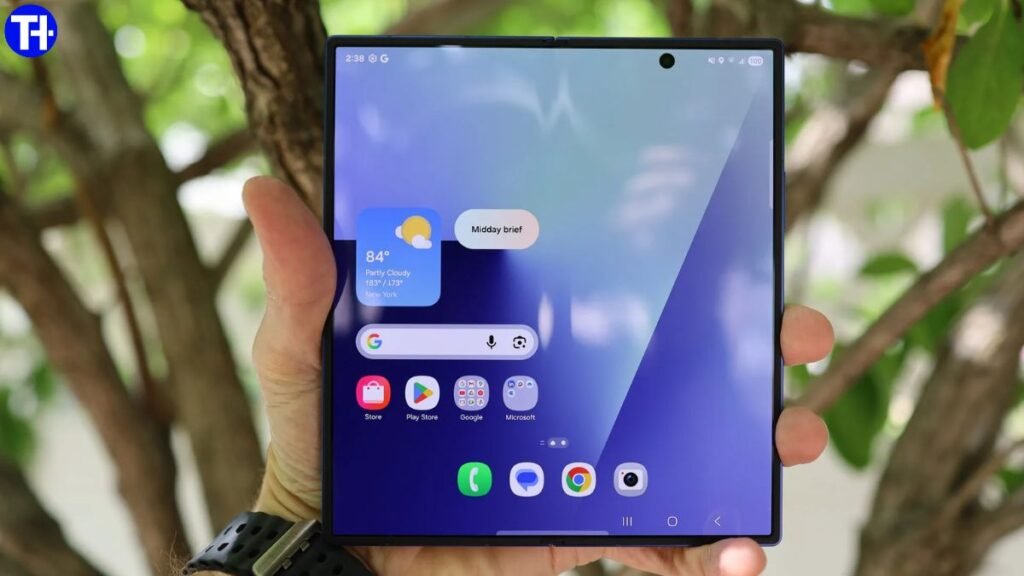
The latest in this line of foldable gadgets, the Samsung Galaxy Z Fold 7, is just amazing. According to our assessment, it’s “the nearly perfect foldable phone.”
With its larger screens, new software, improved main camera, and more powerful processor all housed in a smaller body that rivals the Oppo Find N5, the Galaxy Z Fold 7 feels like a complete revamp after years of incremental revisions.
However, the cost of all of this is higher. Starting at $1,999, £1,899, or AU$2,899, the Samsung Galaxy Z Fold 7 is the priciest smartphone that is currently on the market.
I previously stated that I would never contemplate purchasing a Galaxy Z Fold 7 because it is just too costly. The Galaxy Z Fold 6 was already extremely expensive at $1,899 / £1,799 / AU$2,749, and more costly than the competitor Google Pixel 9 Pro Fold (which launched at $1,799 / £1,799 / AU$2,699), so I think a dollar off $2,000 is just too much money to part with.
Having said that, even while the Galaxy Z Fold 7’s expensive price may be difficult for certain consumers to afford, I believe it has the potential to benefit the folding phone market overall.
Price and possibility
Before I go into further detail, let me state that I do not give phone manufacturers all control over pricing increases. Like everyone at TechRadar, I want to see the average customer get the best deal possible, and price increases feel particularly painful in the current climate of tariffs and uncertainty.
In light of this, costs will eventually increase, albeit gradually. If phone manufacturers use this chance wisely, I believe it presents a chance for significant advancement in the market for folding phones.
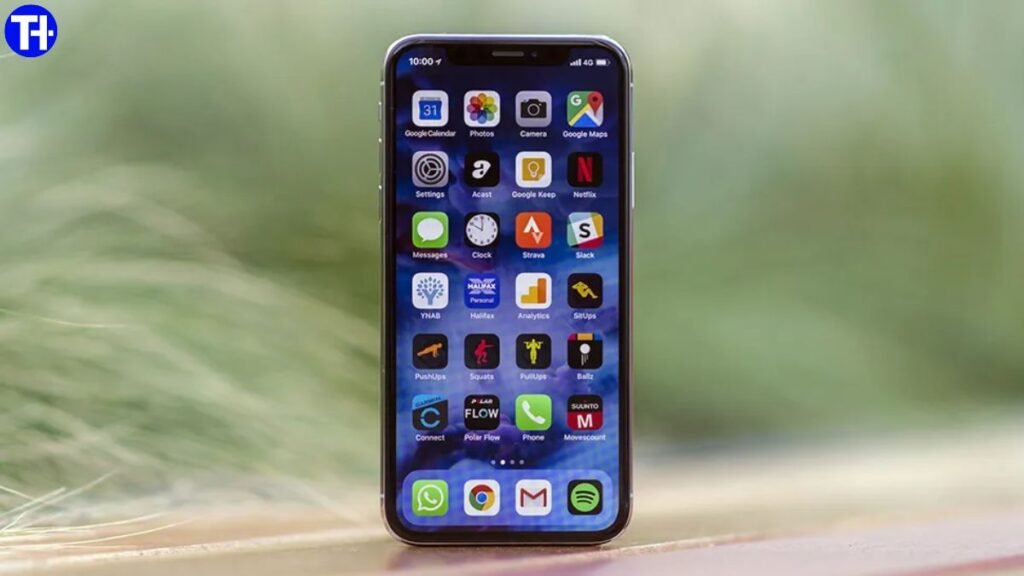
Recall the 2017 release of the iPhone X. At a starting price of $999/£999/AU$1,579, Apple’s all-screen phone was the first phone to be made publicly available; for the average consumer, it was the first phone to cost $1,000.
For comparison, the previous generation iPhone 7 started at $649, £599, or AU$1,079, and the Samsung Galaxy S8 also debuted in 2017 with a starting price of $750, £689, or $1,079. Compared to the Galaxy Z Fold 7, this price rise was proportionately larger.
At the time, this seemed like a significant increase, but phone manufacturers quickly followed Apple’s lead and began to push flagship phone prices close to, and then above, $1,000. Undoubtedly, this increased customer pressure, but it also provided phone manufacturers with additional resources to enhance the models at the top of their ranges.
The finest slab phones of today, such as the Google Pixel 9 Pro XL, Samsung Galaxy S25 Ultra, and iPhone 16 Pro Max, have enormous, stunning screens, three or four excellent cameras each, and enough internal power to make a mid-range PC envious. Phone manufacturers would have less freedom and, to be honest, less motivation to produce such potent gadgets if there was a strict $1,000 cap.
I’m willing to venture that, in the end, cracking the $1,000 barrier benefited the phone business overall. I believe the trade-off was worthwhile after using some of the greatest phones available.
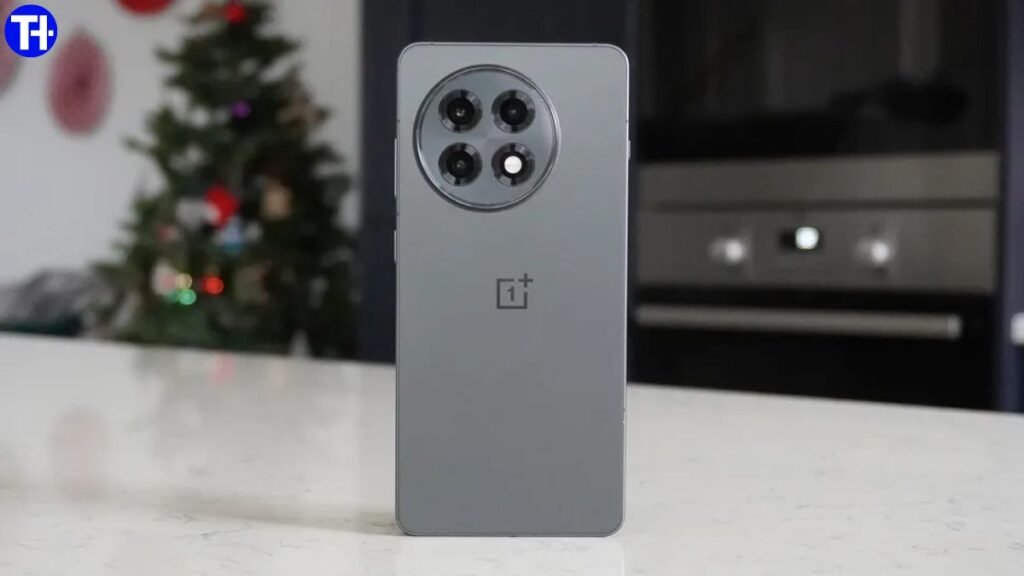
This is particularly true when you take into account that a fiercely competitive mid-range market has developed as the costs of high-end and low-end phones have diverged. This market is populated by fantastic phones like the Samsung Galaxy S24 FE and OnePlus 13R, which provide a near-flagship-quality experience for significantly less money.
Prior to the release of high-end versions like the iPhone X, flagship phones were more expensive than these mid-range phones. For instance, the starting price of the Samsung Galaxy S24 FE is $649.99 / £649 / AU$1,099, whereas the OnePlus 13R is a fairly reasonable $599 / £679.
The future of folding phones

Referring back to the Galaxy Z Fold 7, I would still describe folding phones as an emerging technology. I don’t think we’ve gotten to the point where it’s simple to suggest folding phones over conventional cellphones for the average individual.
After testing a number of folding phones, I can state with certainty that improvements in camera quality, durability, and ergonomics are still needed. Although difficult to accept, price rises may provide folding phone manufacturers with the funds they need to accomplish these advancements.
It’s possible that a market for mid-range foldable phones may arise. Samsung appears to be aware of some demand for reasonably priced folding phones based on the release of the Galaxy Flip 7 FE. The Samsung Galaxy Z Fold 7 might be the first true mid-range booklet folding, priced similarly to a high-end premium flagship, if the iPhone X opened the door for the OnePlus 13R.
All of this, of course, depends on consumers continuing to desire to buy more expensive smartphones and on phone manufacturers investing any extra money in their goods rather than keeping the difference for themselves. That will decide if it’s worthwhile to break through the $2,000 barrier.
Related posts:
 I can forgive losing the S Pen, but the Samsung Z Fold 7 has been ruined by a more serious design faux pas
 The Galaxy Z Fold 7 might be Samsung’s best-selling foldable yet, and I think a tri-fold Galaxy is inevitable
 Samsung Galaxy Z Flip7 Colors, Storage Variants, and RAM Details Leaked: All You Need to Know
 The Samsung Galaxy Z Fold 7 fixes my biggest complaint, but I’d still never buy one – here’s why