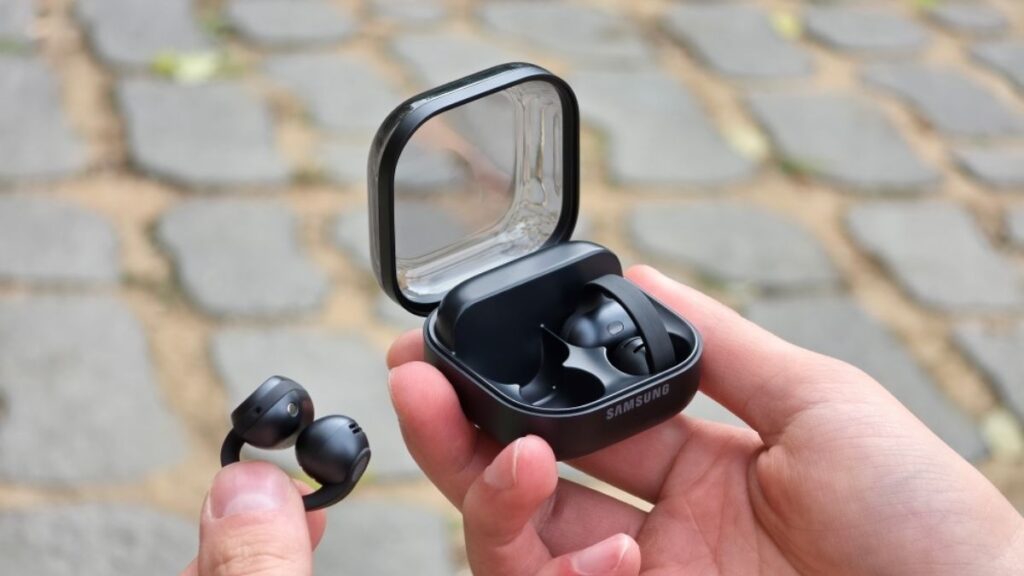
Samsung is expanding its Galaxy audio lineup with the Galaxy Buds On, a new pair of open-ear earbuds designed to combine everyday listening with hands-free AI assistance. The earbuds feature a clip-on design, a TwinBoost speaker system and Gemini Live support, giving users another way to interact with AI without constantly reaching for their smartphones.
Unlike conventional in-ear earbuds that sit inside the ear canal, the Galaxy Buds On are designed to let users listen to audio while remaining more aware of their surroundings. Samsung is also focusing on voice clarity, hands-free controls and comfort, positioning the earbuds for everyday activities such as commuting, walking and running.
The new earbuds bring several features together, including Intelligent Clear Call technology, Quick Voice Memo and Head Gestures. Some AI capabilities require a compatible Galaxy AI-enabled smartphone, while Gemini Live integration provides access to Google’s conversational AI assistant.
Samsung Galaxy Buds On: Key Highlights
- Open-ear clip-on design: A different approach to conventional in-ear earbuds, designed to keep users aware of surrounding sounds.
- TwinBoost speaker system: Engineered to deliver enhanced bass alongside Audio Leakage Reduction technology.
- AI-powered calling: Intelligent Clear Call combines three microphones, a bone conduction-based Voice Pickup Unit Sensor and machine learning.
- Gemini Live support: Compatible Galaxy AI-enabled smartphones can provide hands-free access to Google’s conversational AI assistant.
- Smart hands-free controls: Voice commands, Quick Voice Memo and Head Gestures add new ways to control audio and interact with compatible devices.
Galaxy Buds On Introduce a Clip-On Open-Ear Design
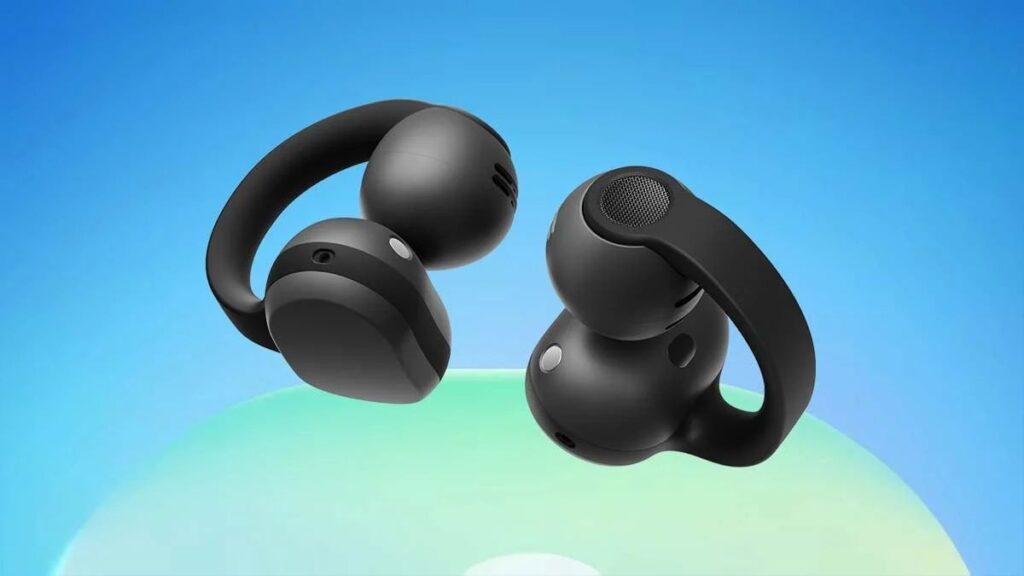
The Galaxy Buds On stand out primarily because of their open-ear design. Instead of relying on a conventional in-ear fit, the earbuds use a clip-on structure intended to keep them in position while allowing users to hear more of the surrounding environment.
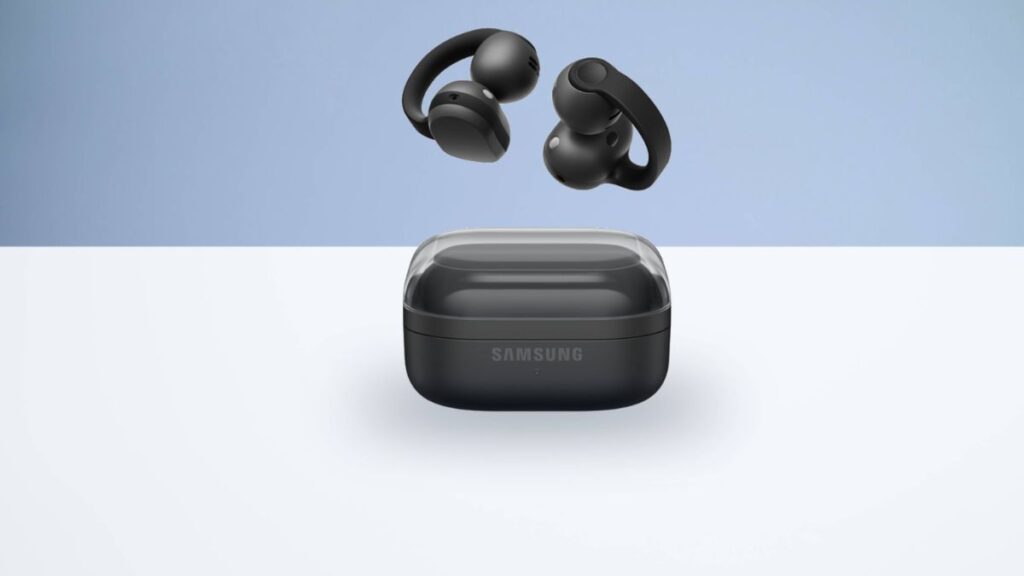
This approach could appeal to people who prefer listening to music or taking calls without completely isolating themselves from nearby activity. For example, runners may want to remain aware of other people, cyclists and traffic while listening to audio outdoors.
Samsung says it developed the ergonomic design using data analysis and simulations covering different ear shapes. An adjustable band angle is intended to help users find a more suitable fit, while the positioning of the speakers and batteries has been optimised for extended wear.
Fit remains an important consideration with open-ear earbuds, as comfort and stability can differ from one person to another. The clip-on design is intended to address these concerns while offering an alternative to traditional earbuds.
TwinBoost Speakers Aim to Improve Bass and Audio Performance
Open-ear earbuds face a particular challenge: delivering an enjoyable listening experience without creating a seal inside the ear canal. Samsung is addressing this with its TwinBoost speaker system, which is designed to provide enhanced bass compared with previous Galaxy Buds models.
The Galaxy Buds On also include Audio Leakage Reduction technology. Its purpose is to minimise the amount of sound escaping from the earbuds during playback, helping make listening more considerate in shared environments.
However, sound leakage can vary depending on several factors, including playback volume, the user’s ear shape, the surrounding noise level and the way the earbuds fit. Samsung cautions that leakage may be more noticeable in quiet settings.
That distinction matters for people who plan to use the earbuds in offices, libraries or other relatively silent environments. Keeping the volume at a reasonable level may help reduce unwanted sound reaching people nearby.
Intelligent Clear Call Uses Microphones and Machine Learning
Call quality is another major part of the Galaxy Buds On feature set. Samsung’s Intelligent Clear Call technology is designed to make conversations easier to understand in noisy surroundings.
The system combines three microphones with a bone conduction-based Voice Pickup Unit Sensor and machine learning. Together, these components are intended to identify the wearer’s voice and reduce interference from background noise.
This could prove useful during phone calls in crowded transport stations, busy streets or other places where environmental noise makes conversations difficult. Rather than relying solely on conventional microphones, the system incorporates additional voice-pickup technology to improve how the user’s speech is captured.
Actual call performance will depend on the surrounding environment and other conditions, but the feature reflects Samsung’s focus on making open-ear earbuds practical for communication as well as music playback.
Gemini Live Brings Hands-Free AI Assistance to Galaxy Buds On
One of the more notable features is Gemini Live integration. When connected to a compatible Galaxy AI-enabled smartphone, the Galaxy Buds On can provide hands-free access to Google’s conversational AI assistant.
Samsung says users can initiate a live conversation by saying, “Hey Google, let’s talk Live.” This allows them to ask questions and interact with the assistant without needing to hold or operate their phone directly.
Potential use cases include asking about running routes, checking distances and requesting information while on the move. For people who regularly exercise, commute or multitask, voice-based access could make AI assistance more convenient.
The experience depends on the compatible smartphone and supported software and services. Users should check device compatibility and regional availability before assuming that every AI feature will work with their existing setup.
Quick Voice Memo Adds Another AI-Enabled Feature
The Galaxy Buds On also support Quick Voice Memo, a feature designed to make voice recording more accessible. Users can begin recording by pressing and holding the back of an earbud.
The feature requires compatible Galaxy AI-enabled devices, along with Samsung’s Voice Recorder and Bixby apps. Once the necessary setup is in place, users can use Bixby to ask about their tasks and listen to relevant details.
This functionality could be useful for capturing reminders, recording thoughts or keeping track of information while away from a desk. Its usefulness will depend on the connected device, the available apps and the specific recording and assistant capabilities supported.
For users who already rely on Samsung’s software ecosystem, the feature adds another potential hands-free workflow without requiring them to interact with their phone for every action.
Head Gestures and Voice Commands Reduce the Need to Touch Your Phone
Samsung is also introducing Head Gestures to make everyday interactions more convenient. Users can nod to answer incoming calls and shake their heads to decline them.
Head movements can also be used for supported notification-related actions and dismissing alarms. The idea is to offer an additional control method when touching the earbuds or smartphone is inconvenient.
Voice commands provide another hands-free option. Users can issue instructions such as “Next song,” “Previous song,” “Volume up” and “Volume down” to manage music playback and listening levels.
Together, these controls could be particularly useful while exercising, walking or carrying items. They also complement the earbuds’ open-ear design, which is intended to support listening while users remain engaged with their surroundings.
What the Galaxy Buds On Mean for Everyday Earbuds
The Galaxy Buds On combine open-ear listening with voice-focused features and AI integration. Instead of concentrating exclusively on music quality or conventional noise isolation, Samsung is presenting the earbuds as a device for listening, communication and hands-free interaction.
Their clip-on design may appeal to people who find in-ear earbuds uncomfortable or prefer greater awareness of nearby activity. The TwinBoost speaker system and Intelligent Clear Call technology address audio playback and conversation quality, while Gemini Live, Quick Voice Memo and Head Gestures extend the experience beyond basic listening.
There are still practical considerations. Open-ear designs cannot provide the same physical isolation as sealed in-ear earbuds, and sound leakage may be noticeable in quiet environments. Some of the AI functions also depend on compatible Galaxy devices and supported applications.
For prospective buyers, the most important factors will be fit, sound quality, call performance, device compatibility and how often they use hands-free AI features.
Final Takeaway
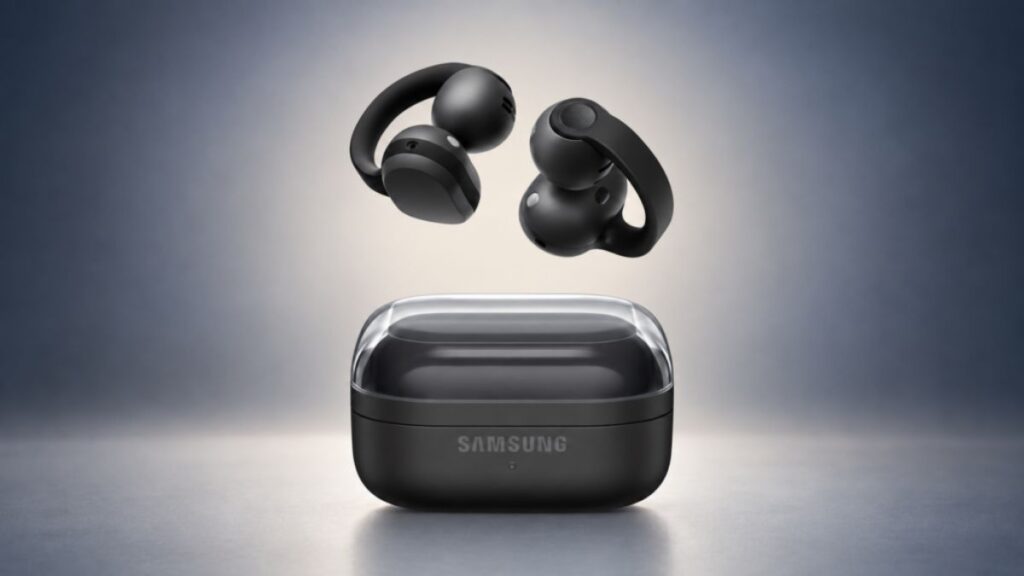
The Samsung Galaxy Buds On bring together a clip-on open-ear design, a TwinBoost speaker system, AI-assisted calling and Gemini Live support. Their combination of voice commands, head gestures and Quick Voice Memo also aims to make everyday interactions less dependent on a smartphone screen.
For users who want to stay aware of their surroundings while listening to music or taking calls, the earbuds offer a different approach to personal audio. Their overall appeal will depend on how well the design balances comfort, sound quality, call clarity and the convenience of its AI-powered features.
Related posts:
 OnePlus Bullets Wireless Z3 Launched in India: 36-Hour Battery, 12.4mm Bass Drivers, Fast Charging, and Affordable Price
 Samsung Galaxy Watch 8 Series: Full Specifications, Pricing, and Launch Details Revealed
 Nothing Headphone (1) Review: Premium Design, Powerful Sound, and Next-Gen Features
 Aqara’s feature-packed G410 video doorbell is now available